




About breed
FLAT-COATED RETRIEVER
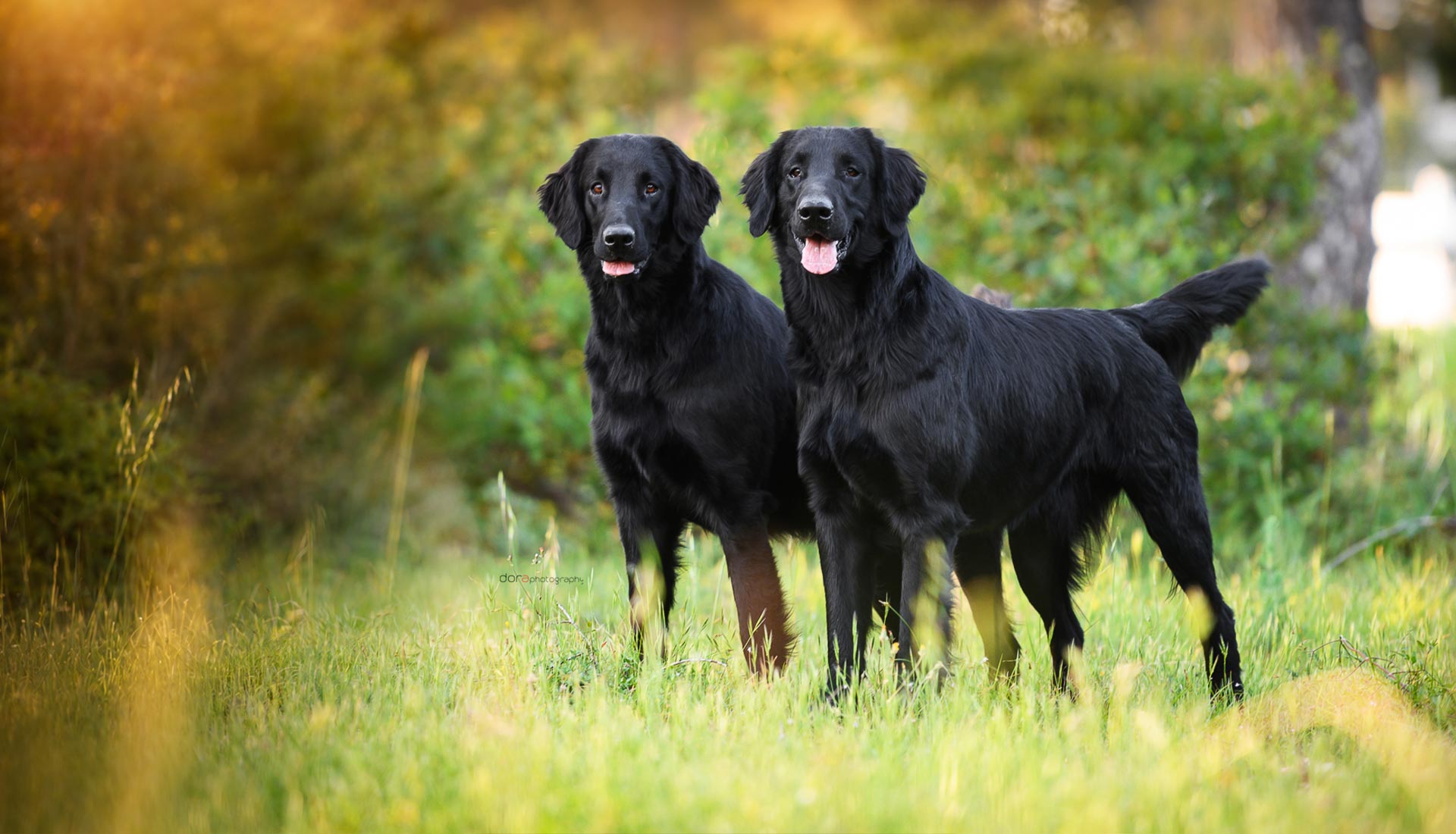
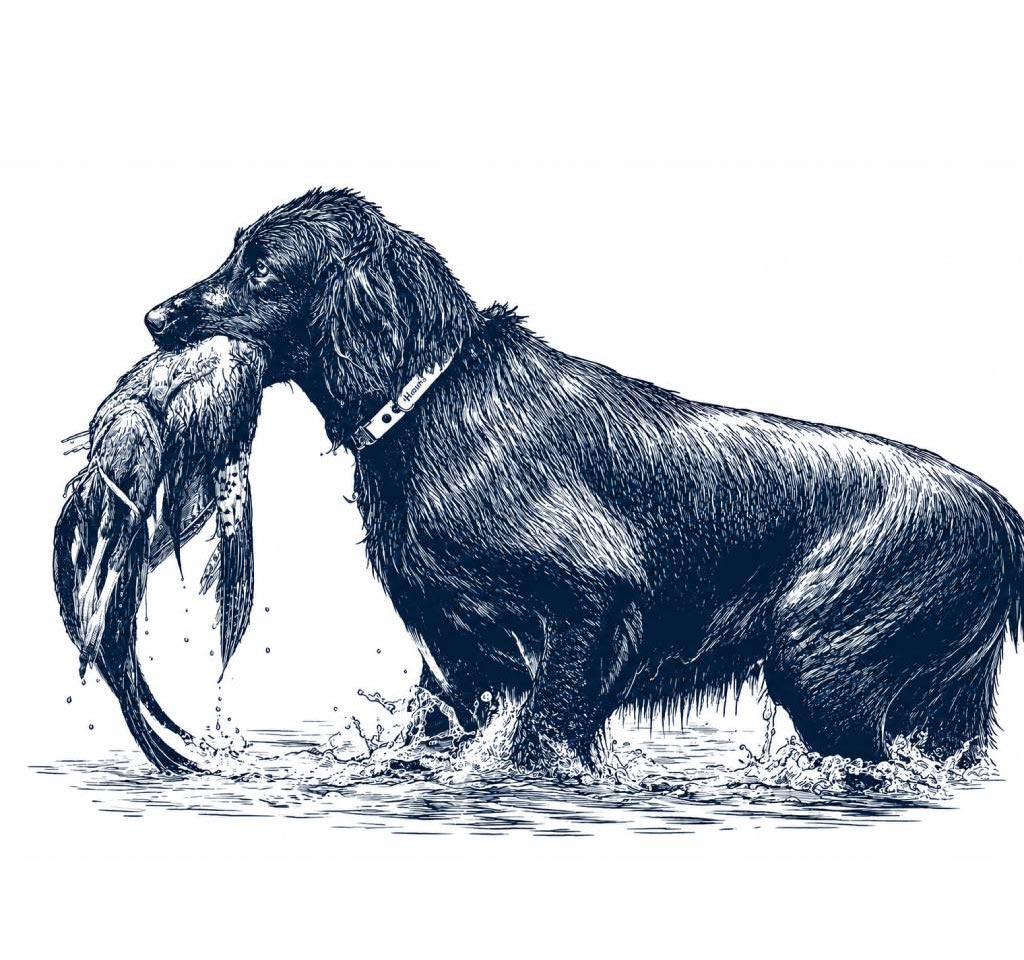
The Flat-Coated Retriever is a breed originating from Great Britain, developed during the mid-19th century. Although the exact development of the breed is not entirely known, the greatest influence came from the St. John’s water dog, water spaniels, setters, and Labradors, while S.E. Shirley is considered the father of the modern Flat-Coated Retriever. The breed was originally developed for hunting, specifically for retrieving shot game from both land and water. By the end of the 19th century, Flat-Coated Retrievers were among the most popular breeds, proving themselves successful both as show dogs and as working hunting dogs. Their popularity declined after World War I, when Labradors and Golden Retrievers took their place.
Today, Flat-Coated Retrievers are rarely seen in hunting, both in our country and in their homeland. They are kind, playful, and active dogs, often nicknamed the “Peter Pan of the dog world,” which perfectly describes them as eternal puppies at heart, always ready for fun and play. Thanks to their temperament, they make excellent family dogs for homes with children, although all play should be supervised, as an enthusiastic Flat-Coated Retriever weighing 25–30 kilograms can easily knock over a small child.
Due to their relative rarity, there are very few Flat-Coated Retrievers without pedigrees. More commonly, these are simply dogs resembling the breed type, often the result of mixing several breeds rather than carrying true Flat-Coated Retriever bloodlines. Aggression is less common in Flat-Coated Retriever lines than in some other retriever breeds, but it is still important to choose a well-bred dog with a pedigree, known ancestors across several generations, health-tested parents, and breeding dogs that have passed required evaluations. Only through selective breeding, careful planning, and detailed study of bloodlines can a cheerful, healthy, and truly typical Flat-Coated Retriever be bred — exactly as the breed should be.
Today, Flat-Coated Retrievers can be found all over the world as beloved companions, show and breeding dogs, as well as working dogs helping people in everyday life: therapy dogs in schools and hospitals, guide dogs for the visually impaired, rescue dogs in water and disaster situations, and even police dogs for drug detection.
Flat-Coated Retrievers are generally easy to train, although during adolescence they can become stubborn, meaning owners sometimes need patience and consistency. Once they understand who the leader is, they gladly accept it. What sets them apart from other retriever breeds is their generally higher activity level. They require plenty of movement and stimulation, and without sufficient exercise they can become frustrated and destructive.
The easiest way to satisfy their need for activity is retrieving games, as they naturally love bringing back thrown objects both on land and from water. Besides physical exercise, they also require attention and affection at home. They enjoy being involved in everything happening around the house without being overly demanding. They are not a “yard dog” breed — they belong with a family that appreciates an affectionate, cheerful, playful, and active companion deeply devoted to its people.
Flattie Symphony
The Magic of the Flat-Coated Retriever
Dear visitors,
instead of the usual facts about the origin of the Flat-Coated Retriever, we would like to share with you a special story — a fairy tale that perhaps best describes the soul of this breed.
Long ago, more than 150 years ago on the British Isles, a breeder dreamed of creating the perfect dog. He wanted a dog that would hunt with purpose, retrieve with gentleness, and move through the world with quiet elegance. He crossed the finest working dogs of his time: St. John’s dogs, early retrievers, setters, and other dogs whose names may have been lost to history, but whose spirit still lives on in today’s Flat-Coated Retriever.
The dog he created could swim like an otter, retrieve game with incredible ease, and work with humans as if reading their minds. Yet the breeder felt something was still missing. The dog was almost perfect — but not quite.
So he called upon his old friend, a wizard who claimed to descend from Merlin himself. The wizard observed the dogs carefully, looked deep into their eyes, and listened to what could not be heard with ears alone. Finally, he said:
“Yes… something is still missing.”
He set off on a long journey all the way to Neverland, where after much thought he found the ingredients this breed lacked:
an irresistible joy for life,
eternal playfulness,
unconditional loyalty,
and a sincere desire for the dog to never truly grow up.
But while his apprentice was preparing the magical potion, he accidentally added a touch of mischief as well. When the first puppies were born, their tails wagged from the very first day, and their eyes sparkled with a special kind of light.
And so the Flat-Coated Retriever was born — a dog that swims, hunts, and retrieves, but above all, a dog that lives life with joy. A dog that never fully grows up. A dog whose tail never stops wagging and whose eyes always reveal genuine happiness when surrounded by its people.
Perhaps that is why, for many of us, the Flat-Coated Retriever is more than just a breed. They are a small reminder that life should be lived with joy, loyalty, and a heart full of play.
Robert D. Westcott
Puppies
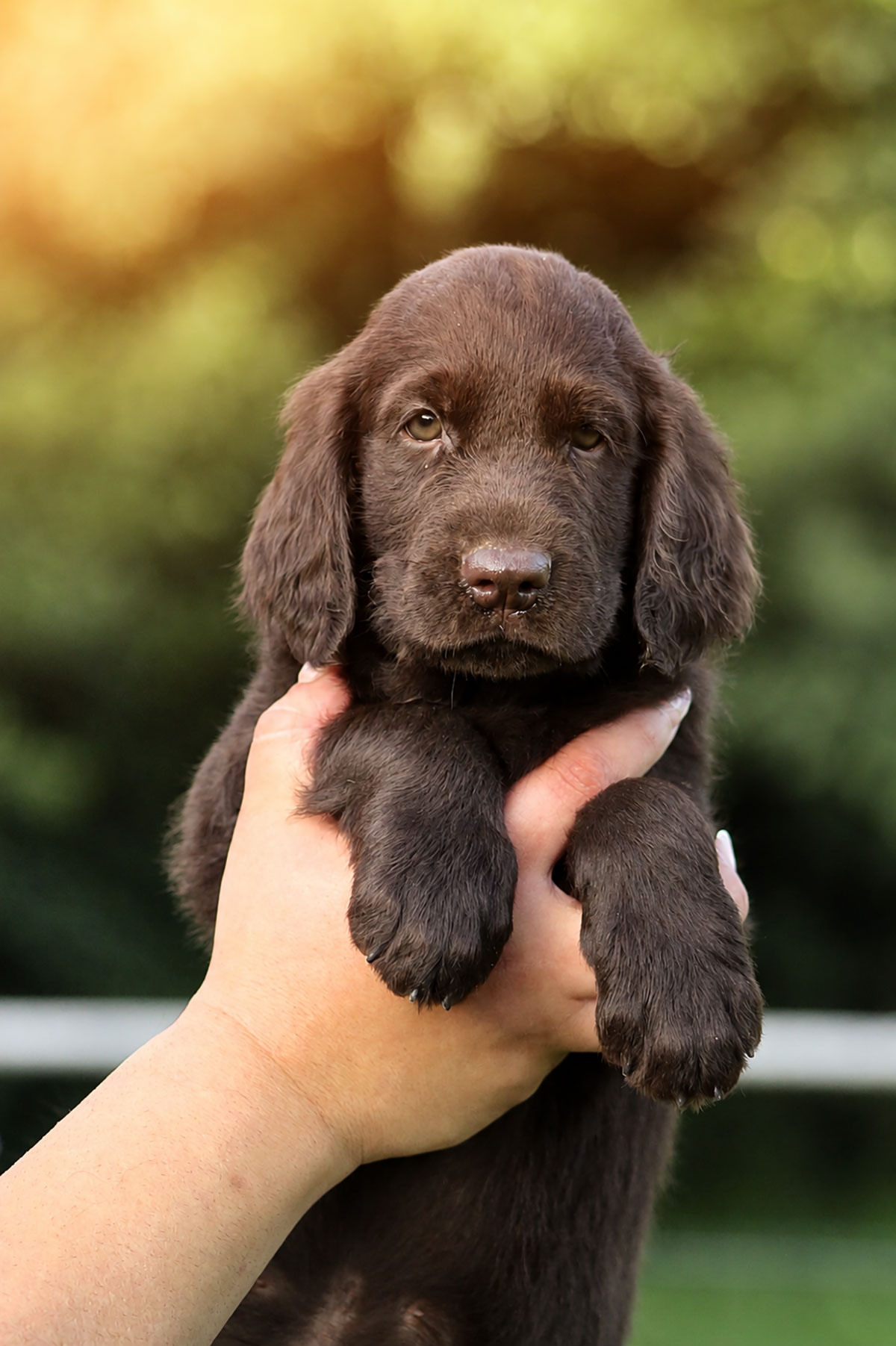
In our breeding program, litters are planned carefully and without rushing. We do not breed frequently or in large numbers — every litter is the result of long and thoughtful consideration of bloodlines, health, temperament, and the type we strive to preserve within the breed.
Our goal is not numerous litters, but healthy, stable, and typical Flat-Coated Retrievers that will become wonderful family companions, as well as true representatives of the breed in work, sports, and the show ring.
Whenever we have a planned or available litter, all information will be published here. In the meantime, you can take a look at some of our previous litters and the dogs that have shaped our breeding program.
Zoran Pleško
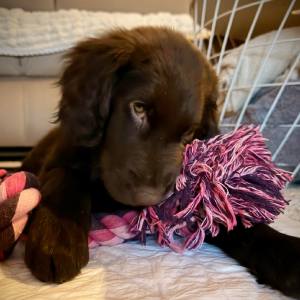
Giving a home to one little Flat was never in question — the only challenge was finding the right one! After a bit of searching and asking around, great recommendations led us to Mrs. Vojna, and a long, sincere personal conversation only confirmed that Jona comes from a wonderful and respected Flat-coated Retriever family, both canine and human alike.
And while it’s surprising that so few people know about Flats, it’s actually a joy to have a dog who not only stands out among the crowd, but is also a fantastic family member, friend, co-worker (oh yes, we no longer need a paper shredder!), and a beautiful little shadow following us everywhere. And for all of that, there is no doubt that a great deal of credit goes to Flatti Symphony!
Lana Feher Turković
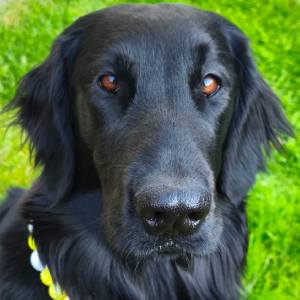
From our very first meeting, Mrs. Vojna completely impressed and won me over with her knowledge and genuine love for the Flat-Coated Retriever breed. She took the time to explain everything about the breed — from their gentle temperament to health and training — and guided me through every step of preparing for my puppy’s arrival.
Her ongoing support (the care truly continues long after you bring your puppy home) has been invaluable, from practical advice to regular meet-ups and grooming appointments. She is always there whenever you need her. You can truly feel how much heart she puts into breeding happy, stable, and well-socialized dogs, as well as maintaining contact with every owner and offering support long after the puppies leave the kennel.
Yumiko Yasue
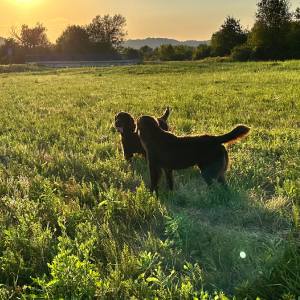
Our warm recommendation for the Flattie Symphony kennel. I first met Vojna at a dog show I attended with a friend, and we stayed in touch afterward. A few years later, I got my puppy from Flattie Symphony.
Vojna is always ready to help, give advice, and assist with everything related to the dogs, including grooming. She also helped connect us with the people from our litter, and to this day we still spend time together, which makes us very happy.
Our Lego has the stable temperament typical of the breed standard, a beautiful structure, and most importantly, he brings even more joy and happiness into our lives.
Tihana Tintor
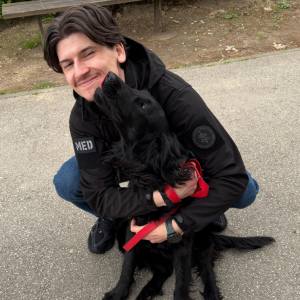
Our Senna comes from a carefully selected and responsible breeding program. Her breeder, Vojna Kralj, invested a great deal of love, knowledge, and dedication to ensure that every dog grows up in a healthy, stable, and caring environment. From the very first days, it was clear how much attention was devoted to the puppies’ socialization and proper development.
Thanks to this approach, our Senna has grown into an exceptionally well-balanced, affectionate, and truly special dog who brings joy into our lives every single day. Vojna is always available for advice and support, which further reflects her dedication and love for the breed.